Matching wattage is not enough when choosing a bulb: check compatibility first, then the light you need.
Start with the light fitting, rather than the old bulb's wattage. The base, available space and manufacturer's instructions determine which products you can use. You can then compare how much light they emit and which colour you prefer for reading, working or lighting the room.
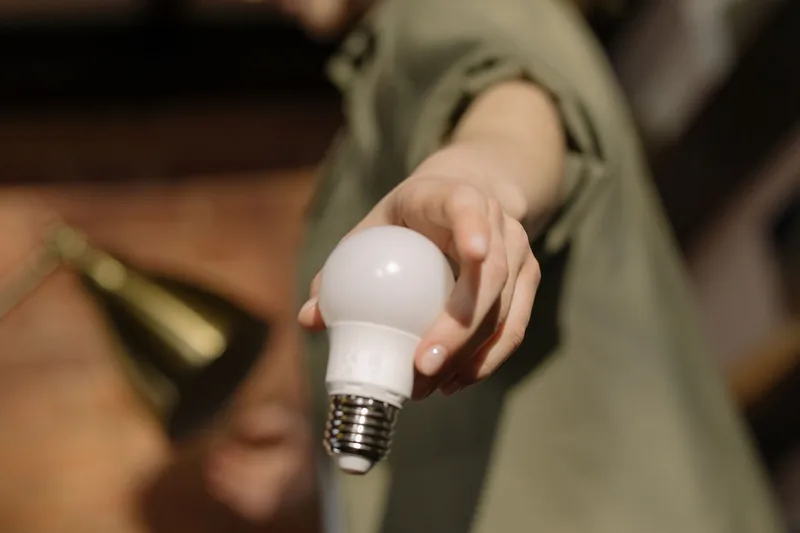
Check the instructions and visible references without dismantling the light fitting. If it is portable, switch it off and unplug it before touching it; let the bulb cool. Do not remove covers or access connections to find a label. If you cannot identify the model with confidence, ask the manufacturer or a professional.
Compatibility before brightness
- Base: it must match the light fitting. The external shape or size does not identify it on its own.
- Dimensions: check that the bulb fits without forcing the shade or diffuser, and follow the usage instructions.
- Limits and surroundings: follow the light fitting's maximum wattage and conditions, including any restrictions for enclosed fittings or damp locations.
- Dimming: if you use a dimmer, both the bulb and the dimming system must be compatible. An LED bulb is not necessarily dimmable.
The Philips safety instructions consulted explain different symbols for light fittings with different uses and limits. Not every symbol applies to every fitting. Look for those for your model; if a light has an integrated LED, do not assume it contains a replaceable bulb.
What each figure on the packaging means
| Detail | What it lets you compare |
|---|---|
| Lumens (lm) | The amount of light emitted. Use it to compare brightness, without confusing it with energy consumption. |
| Watts (W) | Electrical power consumed during use; also respect the light fitting's limit. |
| Colour temperature (K) | The colour of the light: a lower value tends to look warmer and a higher one cooler. |
| Energy label | The efficiency class and declared consumption per 1,000 hours. The current scale for light sources runs from A to G. |
There is no single lumen figure that suits every room of the same floor area. Layout, shades, light position and the task all matter. If you want to improve a dark reading area, consider where the light reaches before increasing the lighting throughout the room.
Take useful details to the shop
Note the light fitting's model, base and the limits in its manual. Add what is missing from the current lighting: more light on the book, less reflection on the screen or a different colour. You can keep a photo of the old packaging without assuming it was the right choice.
The QR code on the energy label lets you look up the model's information in EPREL, the European product database. Use it to confirm the exact reference. If adjusting the lighting means changing a dimmer, bulb holder or fixed connection, seek a professional assessment; this buying guide is not an installation guide.